
When it comes to getting fit, few programs can match the rigorous standards of military fitness training. Imagine shedding pounds and building muscle while shouting out commands, okay, maybe the shouting part is optional. But what’s not optional is the incredible physical and mental benefits that come from a structured approach to fitness designed for peak performance. Breathe in, and let’s jump into the nuts and bolts of military fitness training, where discipline meets determination, and sweat equals success.
Overview of Military Fitness Training
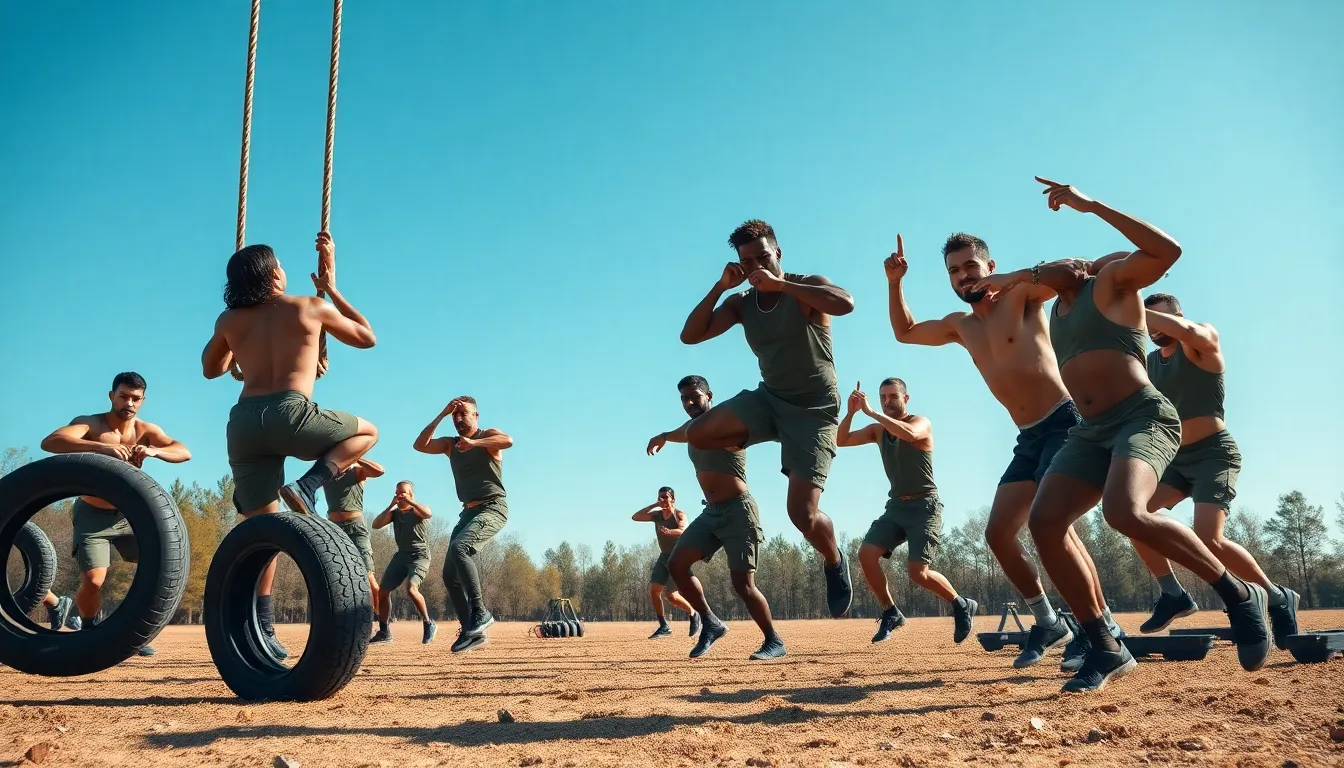
Military fitness training is a comprehensive system designed to prepare individuals for the physical rigor of military service. It’s not just about lifting weights: it’s a dynamic blend of endurance, strength, and agility designed to promote readiness for any situation. This training often mirrors battlefield conditions, focusing on functional movements that mimic real-world scenarios. Participants engage in high-intensity workouts that aim to improve cardiovascular fitness, strength, and flexibility, all crucial for success in the field.
Importance of Physical Conditioning
Physical conditioning is arguably one of the most vital aspects of military training. A soldier’s performance during missions can directly depend on their physical fitness levels. Regular conditioning helps enhance overall health, reduces injury risks, and increases longevity in service. Besides, a well-conditioned body supports mental clarity, enabling soldiers to make quick, rational decisions under stress. Fitness training is not just a requirement: it’s a lifestyle that fosters resilience, discipline, and teamwork.
Components of Military Fitness Programs
Military fitness programs are multifaceted and often include several core components that ensure holistic development.
Common Exercises and Workouts
Exercises typically involve a mix of calisthenics, running, and team-based activities. High-intensity interval training (HIIT) is particularly common, as it enhances stamina and targets multiple muscle groups simultaneously. Participants might find themselves jumping rope or performing burpees, all while pushing each other to go the extra mile.
Strength Training
Strength training in military fitness usually incorporates bodyweight exercises, weightlifting, and resistance training. Push-ups, squats, and deadlifts build functional strength that translates directly to enhanced performance in the field. The aim is not just to look good in a uniform, but to cultivate power that can tackle any obstacle.
Cardiovascular Training
Cardiovascular fitness is essential for sustaining energy levels during prolonged activities. Running, swimming, and cycling are common elements, emphasizing endurance and heart health. Military personnel often engage in group runs to boost camaraderie while pushing each other to improve their personal bests.
Flexibility and Mobility Training
Flexibility and mobility training serves as the unsung hero in military fitness. Stretching exercises, yoga, and dynamic warm-ups prepare muscles for strenuous activity, helping to prevent injuries. A flexible body allows for better movement patterns, which is especially important when navigating challenging terrains or executing complex maneuvers. Incorporating mobility drills ensures that soldiers maintain peak physical form and function efficiently under stress.
Nutrition for Optimal Performance
Training hard is only half the battle: what goes into the body is equally crucial. Nutrition for military personnel focuses on high-protein diets, complex carbohydrates, and healthy fats to fuel activity. Proper hydration is important too, dehydration can sap energy and slow recovery. Nutritional plans often include meal prepping strategies that emphasize whole foods, making it easier to meet caloric and nutrient needs while on the go. Eventually, understanding dietary requirements can catalyze significant performance improvements.
Incorporating Mental Resilience
Mental resilience often flies under the radar but is critical for success in military fitness training. This aspect focuses on developing mental toughness, stress management, and a strong sense of purpose. Techniques like visualization, mindfulness, and goal-setting help enhance mental fortitude. Combatting physical and mental challenges creates a well-rounded individual equipped to handle life’s hurdles, both on and off the field.